← Home / Namibia Packing Checklist
Packing for an ancient desert landscape requires specialized preparation. Namibia's diverse geography creates intense midday heat, freezing nights, and fine sand tracks. Whether you are prepping for a self-drive adventure or a private guided photographic safari, here is your definitive field-tested clothing and equipment index.
1. What to Wear on a Desert Safari: How to Layer for Temperature Swings
Do not let the word "desert" fool you. While afternoons are hot, the clear cloudless skies mean temperatures plummet dramatically at night and during early morning open-vehicle game drives.
- The Warm Insulation Layer: Bring a high-quality fleece, a warm jumper, a windproof jacket, a beanie, and lightweight gloves. You will absolutely need these on open-air 4x4 game drives at dawn or when navigating the foggy Atlantic coastline of the Skeleton Coast.
- The Midday Bush Layer: Pack lightweight, breathable T-shirts, tops, and shorts for the midday sun. Stick strictly to neutral, muted bush tones (khaki, beige, green, brown) to blend seamlessly with the terrain and avoid drawing attention from wildlife.
- The Evening Protection Layer: Bring 2–3 pairs of lightweight long trousers (like cargo or canvas trekking pants) and long-sleeved shirts. These provide excellent defense against solar glare during the day and mosquitoes at dusk.
- Terrain-Tested Footwear: Bring a sturdy, comfortable, well-worn pair of walking shoes or trail runners for scrambling up the Sossusvlei dunes or tracking wildlife. Pack a pair of sandals for relaxing around the lodge or camps.
- Lodge Swimwear: Don't forget a swimsuit. Most premium wilderness camps feature plunge pools to cool off in after a long, dusty road journey.
Planning your own African expedition?
Don't leave your luggage limits or route layout to guesswork. Let Kathryn configure a balanced, fully-vetted, risk-free custom safari proposal for your family.
Request a Custom Route Draft
2. Best Safari Photography Gear: Lenses, Camera Bodies & Supports
Arid environments require specialized shielding parameters to ensure expensive camera bodies and tracking optics remain secure against airborne trail debris.
- Airtight Dust Shielding: The fine, powdery sand and gravel road dust can bypass basic camera seals. Bring heavy-duty, airtight bags to fully enclose your phone, tablet, and camera housings when you are not actively shooting.
- Camera Bodies & Spare Batteries: Bring the best telephoto zoom lens you can manage (a 300mm minimum focal length is ideal for wildlife). Pack extra memory cards and at least one spare camera battery—many remote solar-powered camps disconnect inverter outlets overnight.
- High-Power Tracking Binoculars: These are absolutely non-negotiable. Etosha National Park is vast, and park regulations require vehicles to stay on tracks, meaning wildlife often congregates at a distance. Having a private 8x42 or 10x42 pair ensures you spot the hidden leopard or rhino.
- M-Type Power Adapters: Namibia primarily uses Type M large three-prong round plugs. Bring a dedicated adapter and a rugged, high-capacity power bank to maintain phone charging over long wilderness transfers.
- LED Headlamp: Essential for safety when moving between your private chalet and the main camp dining areas after sunset.
3. Safari Health and Safety: Sun Protection & First Aid Essentials
Protecting yourself from the climate and intense daylight reflections off the salt flats is vital for safety in the bush.
- Hydration & Heavy Moisturizers: The air is exceptionally dry. Bring a durable, insulated water bottle. Pack high-factor moisturizing lotions, hydrating eye drops, and a premium UV-rated lip balm to counteract desert wind exposure.
- Salt Pan Sun Shielding: A wide-brimmed sun hat with a chin toggle, broad-spectrum sunscreen (SPF 30+ minimum), and polarized UV-blocking sunglasses to combat the severe white glare of the Etosha salt pan.
- First Aid & Insect Defense: Pack a personal medical kit containing basic analgesics, anti-motility tablets, oral rehydration salts, insect repellent (DEET-based), and soothing antihistamine creams for minor stings.
- Backup Prescription Eyeglasses: If you utilize contact lenses, always pack alternative eyeglasses. Airborne sand particles can trap dust behind standard lenses, causing severe eye irritation on gravel tracks.
4. Namibia Self-Drive Safari: Driving Licence & Rental Requirements
Because cellular tracking networks completely drop across massive swathes of the desert, route navigation credentials must be physically secured prior to departure.
- Pre-Downloaded Offline Maps: Store offline regional Google Maps directories directly onto your device memory. Always back up your digital routing layout with an official, physical paper road map.
- International Driving Credentials: Keep your native driver's permit alongside an official International Driving Permit (IDP) inside your vehicle glove compartment at all times.
- Unabridged Child Birth Certificates: If traveling with minors under 18 years of age, border authorities strictly require official unabridged certificates detailing parent identities, translated clearly into English.
- Safe Road Protocols: While highway infrastructure is smooth, rural tracks consist entirely of unpaved, graded gravel surfaces. Maintain a strict top speed of 80 km/h on gravel links to minimize skid traction loss and tire delamination risks.
5. Namibia Entry Requirements: Visas, Passports & Entry Rules
Immigration regulations are strictly enforced at Hosea Kutako International Airport (WDH) in Windhoek.
- Passport Blank Page Law: Your passport requires a minimum validation date spanning **6 months** past your scheduled return flight, alongside at least **3 fully blank pages** for official stamps.
- Tourist Visa Exemptions: UK, EU, US, Canadian, and Australian passport holders do not require advance tourist visas for stay durations under 90 days. Explicitly confirm your trip timeline with the border officer on arrival.
6. Namibia Safari Money Guide: Currency Exchange & Tipping
Money management in Namibia is unique due to an official economic partnership with neighboring South Africa.
- The Dual-Currency Matrix: The Namibian Dollar (NAD) is pegged 1:1 with the South African Rand (ZAR). Both currencies pass interchangeably throughout all local businesses. Note: NAD notes are not accepted inside South Africa.
- Wilderness Cash Reserves: While urban centers support standard credit cards, outback network stations regularly lose terminal connectivity. Keep cash reserves for park entry points and tipping protocols.
- Fuel Station Attendant Tipping: By law, all vehicle fuel must be handled by station attendants. Keep a reserve of N$10 to N$20 bills to tip the attendants for window washes and tire pressure assessments.
7. Namibia Self-Drive Safety: Driving Tips for Gravel Roads
Self-drive tracking commands deep respect for empty desert paths. Distances are vast, and technical aid lines can be multiple hours away.
- Headlight Safety Laws: National vehicle regulations mandate that headlights must remain switched **ON** across all highways and unpaved pathways, even throughout bright daytime cycles.
- Left-Side Traffic Alignments: Vehicles drive on the left side of the track. Always ensure your rental layout contains **two fully inspected spare tires**, a functional vehicle jack, and a wheel spanner.
8. Communication, Connectivity & Health
- Local SIM Card Access: Pick up a functional MTC SIM card immediately upon clearing customs inside Windhoek Airport to ensure a basic mobile navigation data stream.
- Water Hygiene Standards: Town tap lines are structurally secure, but remote boreholes vary in mineral density. Always rely on purified, sealed mineral water bottles to prevent minor stomach irritations.
- Malaria Zone Reality Mapping: Southern geographic zones (Sossusvlei, Swakopmund) are entirely malaria-free. If traveling north into Etosha or the Caprivi Strip during wet summer cycles, consult your physician regarding antimalarial scripts.
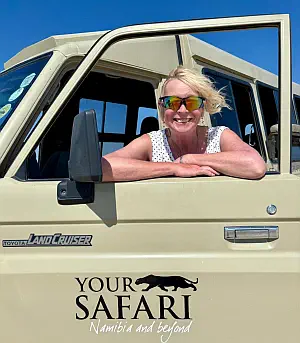
About The Vetting Expert: Kathryn Haylett
Kathryn is a veteran field explorer, author of "The Photographer’s Guide to Etosha," and the founder of Your Safari. She designs custom, safe, and breathtaking itineraries backed by 25+ years of personal African driving experience.